Posts tonen met het label interview. Alle posts tonen

zondag 5 april 2020

Interview Emma Ruth Rundle

Kwetsbare kracht

Met het album ‘Marked for Death’ zette de uit Los Angeles afkomstige Emma Ruth Rundle zichzelf vorig jaar definitief op de kaart als soloartiest. Haar door drone, shoegaze en folk gedreven muziek komt recht uit haar kwetsbare lichaam en het gekwelde hart. Geknakt is zij echter alleszins niet.


Soms is daar een album dat direct bij de eerste luisterbeurten al onder de huid gaat zitten. Waar de muziek weerhaakjes plaatst in de ziel en zich niet meer laat verwijderen, ondersteund door teksten die steeds dieper het hoofd en het hart indringen. ‘Marked for Death’ van de Amerikaanse Emma Ruth Rundle is zo’n plaat. Met regelmaat wordt een gebrek aan zeggingskracht en vertelvermogen in muziek verward met oprechtheid, maar de openhartigheid die Rundle tentoonspreidt in haar werk is krachtdadig in al haar pracht en raakt de luisteraar tot in het diepste wezen.


Leed

Als een gesprek met de bevlogen artiest dat oordeel alleen maar sterkt, is duidelijk dat we te maken hebben met een persoon die niet valt los te koppelen van wat zij creëert. ‘Don’t say this house is haunted / this house is haunted like hell on earth for me’ zingt Rundle in het nummer ‘Haunted Houses’ van haar album ‘Some Heavy Ocean’, en dat gaat op voor al haar solowerk.
Op ‘Marked for Death’ is zelfs sprake van een overtreffende trap daarvan. In acht nummers komen liefde, lichamelijk en geestelijk leed, verlies en de dood voorbij in prachtige poëzie omgeven door aangrijpende texturen van lagen gitaar. Het tot leven brengen van deze nummers tijdens haar optredens is voor Rundle vaak een aangrijpende ervaring. “Tijdens het schrijven van ‘Marked for Death’ was het een doel om een zo eerlijk en persoonlijk mogelijk album te schrijven. Als ik dat materiaal nu live speel, heb ik daar soms moeite mee. Het brengt me terug naar een aantal van de meer donkere hoeken van mijn leven en hoe ik die ervaren heb. Dat is wel eens een worsteling op emotioneel gebied, vooral als ik solo speel. Het mooie van alleen op het podium staan is dat het me de ruimte geeft om echt op te gaan in de nummers, om er geheel mee verbonden te zijn. Ik kan de nummers dan ook aanpassen aan het moment, aan hoe ik me voel. Dat is voor mij van essentieel belang. De laatste tijd heb ik in de Verenigde Staten veel gespeeld met een band, waarbij het meer om de groepsdynamiek gaat. Ook dan investeer ik veel emotie in het optreden, maar in emotioneel opzicht is het dan toch minder intens. De concerten worden er anders door: minder intiem, maar soms ook juist krachtiger en harder.”

Foto: Niels Tubbing

Kwikzilver

De open houding in haar muziek maakt Rundle in zekere zin kwetsbaar, zowel tijdens optredens als naar haar publiek toe. Het van haar afschrijven van ellende helpt haar om verder te gaan met haar leven, om zaken af te sluiten. Maar het steeds weer spelen van het materiaal is soms als het openhalen van oude wonden. Ook in haar interviews heeft Rundle dezelfde openheid en vertelt ze zonder terughoudendheid over problemen die ze heeft gehad met drank en drugs, over persoonlijk verlies en over haar aandoening adenomyose.
Op de vraag of haar eerlijkheid wel eens als een boemerang terug knalt, antwoordt Rundle bevestigend: “Ja, toch wel... Ik houd er eigenlijk niet van als mensen me vragen stellen over zaken die ik ooit eens heb gezegd. Ik heb een kwikzilveren geest als mens en als artiest, en vind dat ik de vrijheid heb om te veranderen van mening en van stijl. Dat is erg belangrijk voor me. Absolute waarheid bestaat niet, alles is toegestaan. Het hangt ook heel erg af van de stemming waarin ik me bevind op het moment dat mensen me vragen stellen. Soms kan ik transparant zijn en geef ik persoonlijke en uitgediepte antwoorden, maar soms ook gewoon niet. Wat betreft mijn teksten: ik spreek zelden over de betekenissen daarvan, omdat die me na aan het hart liggen. Toen ik opgroeide was ik vaak teleurgesteld in het muziekaanbod. Ik ben altijd erg bezig met teksten, ze zijn een integraal onderdeel van de totaalervaring. Ik ben een erg gevoelig persoon. Tijdens optredens heb ik het soms moeilijk – als ik erg moe ben, als ik niet gegeten en slecht geslapen heb… Dan komen de emoties extra hard binnen. Tijdens mijn tour voor ‘Some Heavy Ocean’ moest ik soms huilen tijdens een show. Als ik de muziek speel, word ik teruggebracht naar het moment dat ik het nummer schreef. En als dat een pijnlijk moment is, dan voel je dat... Het gaat uiteindelijk om de emotionele lading van de nummers, dus als ik dat voel tijdens het spelen dan betekent het dat ik een juiste staat bereik om de muziek over te brengen. Het ergste dat je kan overkomen is dat je een show speelt en niets voelt. Dan wordt een act.”
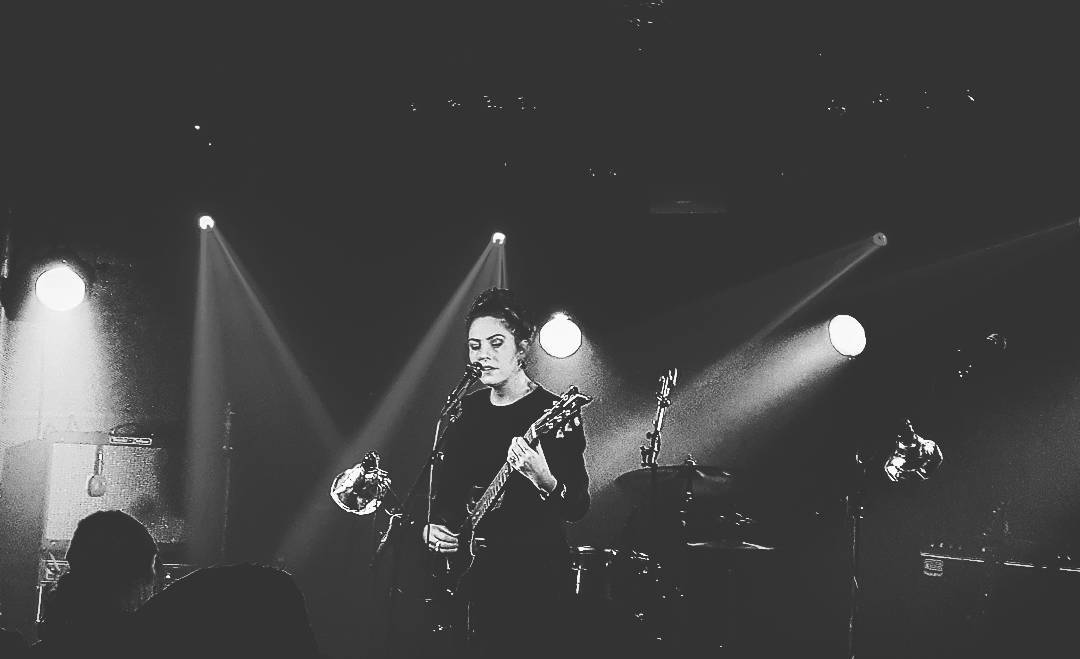
Foto: Niels Tubbing

Autonoom

Naast haar eigen werk, dat naast ‘Marked for Death’ bestaat uit het instrumentale album ‘Electric Guitar 1’ (2011) en het reeds genoemde, indringende ‘Some Heavy Ocean’ (2014), heeft Rundle een aardige muzikale reis achter de rug in verschillende bands, en niet de minste. Na het oprichten van The Nocturnes in Los Angeles komt ze in aanraking met Red Sparowes, waar zij als gitarist aanhaakt ten tijde van het album ‘The Fear Is Excruciating, but therein Lies the Answer’.
Samen met Greg Burns, bassist van die band, start ze in 2012 Marriages. Die band ontstaat als Red Sparowes wordt gevraagd om het voorprogramma te spelen van Russian Circles. Niet alle bandleden kunnen, maar dat weerhoudt Burns en Rundle niet. Speciaal voor het optreden schrijven ze het album ‘Kitsune’ en wegens positieve reacties besluiten ze daarmee verder te gaan. In 2015 brengt het tweetal, inmiddels aangevuld met drummer Andrew Clinco, opvolger ‘Salome’ uit. Daarnaast experimenteert Rundle nog als The Headless Prince Of Zolpidem, waarmee zij voornamelijk met vocale effecten en texturen speelt.
Hoewel er zeker een rode draad loopt door al haar werk, is ook duidelijk dat Rundle als artiest en als persoon in een constant proces zit. Dat proces is er voor Rundle over het algemeen niet eentje dat ze volledig heeft uitgedokterd. “Ik weet nooit precies waar ik heen ga, en houd er ook niet van als ik teveel wordt gekoppeld aan wat ik in het verleden heb gedaan. Elke keer als ik wel een plan maak, gebeurt er weer iets waardoor mijn leven verandert en ik mezelf op onverwachte plekken terugvind, zowel geografisch gezien als op psychologisch vlak. Tot voor kort was ik van plan om ‘Marked for Death’ op te volgen met een akoestisch album, waarvoor ik zelfs al lessen klassieke gitaar volgde en me richtte op het verbeteren van mijn finger picking skills. Maar het spelen met een band de afgelopen tijd heeft me weer doen verlangen naar een focus op volledige instrumentatie. Dus het is afwachten, de tijd zal het leren. Voorlopig heb ik eerst een lange tour in Europa voor de boeg, dus over twee maanden zal ik waarschijnlijk weer een ander persoon zijn. Wat ik wel kan zeggen is dat ‘Electric Guitar 2’ onderweg is. Ik zou verder een erg lang verhaal kunnen ophangen over hoe mijn muzikale reis me als persoon en muzikant heeft veranderd, maar uiteindelijk komt het er op neer dat ik nu een plek heb gevonden vanwaaruit ik krachtiger kan schrijven, en meer tot de kern kan komen. Deels komt dat doordat ik nu meer alleen schrijf en veel solo heb getourd. In een collectief werken is een geweldige ervaring, maar het kan ook moeilijk zijn om het momentum vast te blijven houden. Daarnaast ben ik een sterkere vrouw geworden en een autonomer mens.”

Foto: Niels Tubbing

Gemeenschap

Ondanks de groei in autonomie, speelt Rundle nu dus ook haar eigen werk vaker met een band, in plaats van solo. Dat heeft zijn voor- en nadelen. “Optreden met de band waarmee ik nu speel is een geweldige ervaring. Chuck French en Neil Keener, die ook in Wovenhand spelen en in de band Planes Mistaken For Stars, zijn er onderdeel van. Ook drummer Dylan Nadon van de band Git Some zit erin. Het samenspelen met hen op het podium en het onderweg zijn met hen haalt veel van de emotionele vermoeidheid weg waar ik normaal gesproken last van heb. De shows in Europa zullen deels met een band zijn, en deels solo.”
De band die haar tijdens de Europese tour zal ondersteunen is Jaye Jayle, die een deel van de tour ook als voorprogramma zal fungeren. Rundle heeft eerder in Europa getourd met Wovenhand, zowel met Marriages als met haar solowerk. In de Verenigde Staten heeft ze het podium gedeeld met onder meer Alcest, Russian Circles, Deafheaven en This Will Destroy You. Op het Dunk!festival staat ze samen met artiesten als Swans, Pg.Lost en God Is An Astronaut. De grote gemene deler tussen al deze bands en haar eigen werk lijkt de intensiteit waarmee de muziek wordt gebracht. “Wat al deze bands delen is een bepaalde sfeer, waarmee er een zekere emotionele lading ontstaat. Daarnaast is het natuurlijk allemaal door gitaar gedreven muziek, waar ik goed bij aansluit. Eerlijk gezegd denk ik dat het belangrijkste aspect gewoon vriendschap is. We zijn allen onderdeel van dezelfde gemeenschap en het is eigenlijk logisch dat je met je vrienden daarin optrekt.”
Nog twee grote namen in die gemeenschap zijn Dylan Carlson (Earth) en Kurt Ballou (Converge), waarmee Rundle een nummer heeft opgenomen. “Het werken met Dylan was een bijzondere ervaring en een grote eer. Net als de samenwerking met Kurt, bij wie we in zijn GodCity Studio te gast waren. Het opnemen was een vreemd proces voor mij: al samenspelende ontdekten we hoe we het nummer wilde hebben, maar het kwam er geweldig uit. In de toekomst staan nog een aantal samenwerkingen op de agenda, maar eerst wil ik Greg Burns weer bewegen om met Marriages aan de gang te gaan!”


Escapisme

Stil zitten is iets dat Rundle niet vaak lijkt te doen. De afgelopen jaren kwam elk jaar wel een album uit waaraan ze heeft meegewerkt, en ook in 2017 is daar al een eerste uitgave in de vorm van een split-ep met Jaye Jayle, ‘The Time between Us’.
Haar immer stijgende status, vooral na het uitbrengen van ‘Marked for Death’, zorgt ervoor dat ook steeds meer mensen iets van haar willen. Dat kan soms een tol eisen. “Het kan erg stressvol zijn, vooral in combinatie met het zakelijke en logistieke deel van het artiest zijn. Ik ben erg van de spontane aanpak en dingen aanpakken op het moment dat ze voorbijkomen, maar dat is weleens lastig. Zoals het doen van dit interview bijvoorbeeld. Ik vind het belangrijk en leuk om te doen, maar als ik aan het touren ben is het vaak lastig om te regelen. Ik ben daarom ook mijn label Sargent House erg dankbaar voor al hun steun en toeverlaat. Zonder hen, en Cathy Pellow in het bijzonder, had ik dit allemaal niet kunnen doen. Als rolling stone is het ingewikkeld om relaties te onderhouden, ik leef toch meestal in het moment. Aan de ene kant is het constant onderweg zijn een vorm van escapisme, van het ontsnappen aan dagelijkse beslommeringen, maar aan de andere kant is het moeilijk om creatief bezig te zijn. Schrijven tijdens een tour is vrijwel onmogelijk voor me. Wat dat betreft heb ik een haat-liefdeverhouding ermee.”
Waar Rundle ook vrijwel geen tijd voor heeft als ze onderweg is, is aandacht besteden aan haar beeldende kunst. Naast muziek maakt ze namelijk ook tekeningen, schilderijen, foto’s en ander beeldend werk. “Dat onderdeel van mijn leven is iets wat ik momenteel erg mis. Vroeger schilderde ik nog weleens als we in een busje rondreden, of ik maakte video’s om later te gebruiken, maar momenteel is dat allemaal wat teveel van het goede. Met mijn beeldende kunst ga ik vele verschillende kanten op, ik heb eigenlijk gewoon wat tijd op één plek nodig om daar een beetje lijn in te brengen en om dingen af te maken waar ik al geruime tijd mee bezig ben. Voor mij communiceert mijn beeldend werk iets totaal anders dan mijn muziek, ze zijn niet aan elkaar gerelateerd. Behalve dan wanneer ik een video maak voor een van mijn nummers, zoals voor ‘The Distance’.”

Foto: Kristin Cofer

ACLU

Een verschil met beeldende kunst en optreden als muzikant is ook de mate van verbinding met het publiek. Rundle is wat dat betreft onder de indruk van de performancekunstenaar Marina Abramović, die een zeer directe en persoonlijke verbinding zoekt met de toeschouwer. Als dat lukt kan er een overweldigende intensiteit ontstaan, iets dat muzikanten vaak ook opzoeken. “Ik heb in Californië aan een kunstacademie gestudeerd. Daar hield ik me veel bezig met performancekunst in relatie tot het publiek. Maar als muzikant op een podium is dat vaak lastiger, omdat er een scheiding wordt gecreëerd tussen de artiest en het publiek. Als ik solo speel probeer ik daar zoveel mogelijk doorheen te breken, om de verbinding te zoeken met de mensen.”
Dat doet ons denken aan een opmerking van Geoff Rickley van de band Thursday tijdens een concert ooit. Hij sprak over een arbitraire scheidslijn tussen de band op het podium en het publiek in de zaal. Band en publiek kunnen niet zonder elkaar bestaan en zouden de grens tussen hen in moeten laten oplossen. Rundle herkent het gevoel. “Het is niet eenvoudig dat voor elkaar te krijgen, maar als het lukt, als artiest en toeschouwer elkaar vinden, ontstaat er iets magisch.”
Zowel in haar muziek als in haar interviews komt Rundle over als een betrokken en empathisch persoon. In het huidige politieke en sociale klimaat in de Verenigde Staten kan zij het dan ook niet laten om zich uit te spreken. Onlangs bracht zij een exclusief nummer uit op haar Bandcamp-pagina getiteld ‘Forever the Setting Son’, waarvan de opbrengsten in zijn geheel naar de American Civil Liberties Union (ACLU) gingen. “Ik wil voorkomen dat ik ten prooi val aan verveling en de verbinding met de werkelijke wereld verlies. Ik zou liegen als ik zou zeggen dat de huidige situatie in de Verenigde Staten geen grote impact heeft op mijn moreel. Vooral als vrouw is het verdomd moeilijk en deprimerend op het moment, maar we moeten hard blijven werken om het beter te maken. Iedereen kan een steentje bijdragen. Ik heb een T-shirt ontworpen dat ik verkocht tijdens de tour, waarvan de opbrengsten ook naar de ACLU gingen. Je merkte dat mensen dat waardeerden en het is fijn dat je op je eigen manier een bijdrage kunt leveren. Het deprimerende van de hele situatie is tastbaar op het moment, maar duurzaam kan en zal het niet zijn. Things will get better.”


Tekst: Niels Tubbing
Geschreven voor Gonzo (circus)

maandag 15 oktober 2018

Interview met Imperial Triumphant

Observaties van het stedelijk kwaad

Waanzin gebeiteld in realisme. Imperial Triumphant uit New York City windt er geen doekjes om. Met hun steeds verder verfijnde duistere metal stompen ze steeds harder diep in de tere ziel. Vervlochten met de stedelijke omgeving zoeken zij de grenzen op van wat de luisteraar kan verdragen.


Ongemak, angst en aantrekkingskracht. Zomaar drie gevoelens die tegelijkertijd naar boven komen bij de eerste malen luisteren van het werk van de Amerikaanse band Imperial Triumphant. Waar hun oudere werk nog redelijk in het straatje van de wat meer geijkte black metal kan worden geplaatst, verzette de band alle piketpaaltjes met hun Abyssal Gods uit 2015. Zelden zo een serie onverwachte klappen tegen het smoelwerk gehad als bij het beluisteren van deze langspeler. In 2016 kwam er alweer nieuw werk uit: de ep Inceste, alwaar de wegen alweer nog maar ondoorgrondelijker werden. Aangezien de band nog geen optreden in Europa heeft gedaan (edit: de band speelt op Roadburn 2019), vonden wij het hoog tijd om eens een handreiking te doen naar de heren achter deze majestueuze malheur.


Anton Webern

Imperial Triumphant bestaat al een decennium en heeft op de verschillende metalblogs die het internet rijk is al vele hoge ogen gegooid. Toch is de band, die bestaat uit zanger/gitarist Ilya Ezrin, bassist Steve Blanco en drummer Kenny Grohowski, nog niet erg bekend in deze omstreken. Dat komt allicht door de moeilijk verteerbare kost die het drietal (dat lange tijd met nog een extra bassist en drummer muziek schreef) presenteert. In de tien jaren van het bestaan hebben de heren een aardige muzikale reis erop zitten. Naast black metal komen er invloeden van free jazz, avant-garde, doom en drone voorbij. Ezrin geeft duiding: “Onze muziek heeft een behoorlijke revolutie doorgemaakt. We zijn constant op zoek naar nieuwe mogelijkheden, naar nieuwe stijlen die we kunnen opnemen. Onze muziek bestaat bij de gratie van dissonantie, van een agressieve en technische manier van spelen. Niet in de zin dat we onze vaardigheden per se willen tonen, maar we zijn wel op zoek naar steeds nieuwe uitdagingen, om de grenzen van ons kunnen op te zoeken en die dan over te gaan. We zijn nu op een punt aangekomen waar het erg goed begint te worden, waar iedereen in de band ook zijn eigen onmisbare bijdrage aanlevert.” Die bijdrage wordt geleverd door muzikanten die allen zeer onderlegd zijn in het componeren van muziek. Ezrin heeft een diploma van de California Music Academy en allen zijn professioneel jazzmuzikant geweest. Dit zorgt ervoor dat de band bij het schrijven erg gericht is op structuren en hoe de muziek overkomt bij de luisteraar. Blanco geeft aan dat de brede muzikale ontwikkeling van de bandleden een groot voordeel is bij het schrijven van en nadenken over de muziek. “Het interessante aan onze band is dat alle bandleden erg onderwezen zijn in, en fan zijn van, de muziek die we aanhalen. Als iemand van ons bijvoorbeeld een componist als Anton Webern aanhaalt, weet iedereen gelijk wat er bedoeld wordt. Dat zorgt voor een zekere cohesie, waarbij we altijd ook het totaalplaatje voor ogen hebben. We richten ons niet zozeer op wat de individuele bandleden spelen, maar meer op het grotere sonische landschap.”


Metropolis

Dat landschap is er voornamelijk eentje in de urbane setting. Niet alleen het album Abyssal Gods, met het angstaanjagende artwork van Andrew Tremblay die op verzoek van de band een ‘monsterlijke stad’ tekende, maar het hele oeuvre staat zo’n beetje in het teken van de ontbindende kenmerken van de stad, en New York in het bijzonder. “Imperial Triumphant is geïnspireerd door de stad, door de urbane omgeving. Als ik New York in een woord zou moeten omschrijven zou dat ‘zwaar’ zijn. Soms is het de mooiste plek ter wereld, maar vaker is het een verstikkende plek.” We halen Léopold Lambert aan, die met zijn tijdschrift en blog The Funambulist filosofeert middels architectuur. In de stad, met zijn wolkenkrabbers en sloppenwijken, speelt het ruimtelijke (of een gebrek daaraan) een grote rol in heersende machtsstructuren. Ezrin en Blanco geven aan daar aandacht aan te besteden in hun werk en halen als voorbeeld de film Metropolis (Fritz Lang, 1927) aan. “New York, en vooral Manhattan, is een verticale stad, waar het geld hoog uittorent boven de armoede, die op straat of zelfs daaronder te vinden is. Het is een beetje zoals in Metropolis. De top van de gebouwen vormen de kwaadaardige kroon van de stad, daar waar het bedrog huist. Die film is een mooie verbeelding van hoe de stedelijke maatschappij is gestructureerd, hoe middelen zijn verdeeld.”
De band heeft in het verleden aangegeven een alternatief te willen bieden voor Satan, voor wie de mensen tegenwoordig in feite toch geen angst meer hebben. Ezrin ziet in de realiteit van de stad een andere bron van het kwaad. "New York is een stad waar enkele van de meest kwaadaardige zaken plaatsvinden en dan bedoel ik niet zoiets als duivelsaanbidding, maar het echte kwaad dat in de realiteit genesteld zit. Verschrikkingen die in deze stad gebeuren vinden niet plaats in een sprookje, maar in de horror van het werkelijke leven. Dat is de invalshoek die we gebruiken met onze muziek -het gebruiken van realisme als middel om horror te presenteren.” Een voorbeeld van wat Ezrin bedoelt is te zien in de videoclip bij het nummer ‘Crushing the Idol’. “Ik groeide op in een wereld van deftige privé-scholen, waarvan de buitenwereld alleen de glans ziet. Maar in werkelijkheid is iedereen verwilderd en zedenloos. Die shit die je in de video ziet, dat gebeurt de hele tijd in New York. Kinderen van een jaar of negentien die prostituees bestellen op een vrijdagavond, gewoon omdat het kan. En het gaat altijd ongestraft, want zo zijn de wetten van de wereld. Veel mensen waren onthutst na het zien van de video, omdat je personages ziet aan wie je een oprechte hekel hebt, maar die nooit hun verdiende loon krijgen. Wat dat betreft is het een spiegel van de realiteit.”


Rites of Spring

De horror van de realiteit. Of het besef daarvan. Het beluisteren van de muziek van de heren is alleszins een confrontatie. De eerste malen moesten we even doorbijten bij het aanhoren ervan. Een proactieve benadering was nodig om te achterhalen waarom Imperial Triumphant aanvankelijk tegelijk naar en intrigerend is. Maar de aanhouder wint en stapt een wereld binnen die verwondert en verslavend werkt. Blanco herkent dit in een eigen ervaring. “Wat je daar beschrijft is precies waar we naar op zoek zijn, in zekere zin. Ik herinner me een plaat van mijn vader, die een grote rol heeft gespeeld in mijn jeugd. Het was Rites of Spring van Igor Stravinsky. De eerste keer dat ik dat opzette was ik een klein kind en ik schrok me wezenloos... maar tegelijk kon ik het niet afzetten, ik moest er naar blijven luisteren. Ik was er door aangetrokken, recht door de angst heen, en de muziek werd een obsessie voor me en zodanig een blauwdruk voor hoe ik met muziek om ben blijven gaan. Als mensen dat hebben met ons werk, dat ze op die manier een verbinding ermee hebben, dan is dat voor mij een succes.” Het beeld van Herman Hesse en Abraxas doemt op: wie geboren wil worden, moet eerst een wereld vernietigen. “Voordat je kunt groeien, moet je je eerst ongemakkelijk voelen,” vult Ezrin aan. Wat dat betreft is de luisteraar bij Imperial Triumphant aan het goede adres. Hoewel er ook gelachen kan worden met de heren, zo blijkt als Blanco moeiteloos een opsomming geeft van steden in Nederland, Ezrin in vrolijke verbazing brengende. “Ik heb een paar jaar in Amsterdam gewoond, vandaar.”


(Auteur: Niels Tubbing. Oorspronkelijk verschenen in Gonzo (circus) #139)

donderdag 15 februari 2018

Black Decades - De helende werking van herrie

De Nederlandse black metalband Black Decades is onlangs de studio in gedoken om te werken aan hun nieuwe album. Deze week werd bekend dat de band is toegevoegd aan de reeds imposante lijst van topbands die dit jaar op Roadburn aan zullen treden. Genoeg reden om terug te blikken op een interview dat ik met de band had in 2016, opdat we met extra veel enthousiasme vooruit kunnen kijken naar wat Black Decades nog brengen gaat.


Teringherrie kan een perfect werktuig zijn in het omgaan met de afgrijselijke kanten van het verleden. Black Decades heeft dit middel omarmd en raakt in haar zelfreiniging tevens de uiterste randen van een rafelschoonheid aan. In 2016 sprak ik met gitarist Thale Roosien en toenmalig zanger Mark van de Maat, die inmiddels is opgevolgd door nieuwe zanger Johan van Hattum.


Zet drie muziekliefhebbers bij elkaar aan een tafel op een zonnig terras van de Tolhuistuin te Amsterdam en in plaats van het geplande interview wordt er het eerste half uur gewoon over muziek gepraat. Thale Roosien en Mark van de Maat, gitarist en zanger van de Nederlandse blackmetalband Black Decades (met stevige invloeden van doom en crust), zijn alleszins niet voor een genre te vangen. De heren kennen elkaar alsook William te Morsche (drums) en Marcel van Losser (bas) uit Twente en hebben er al een aardige geschiedenis in de muziekwereld opzitten met punkbands als Cathode, Kriegstanz en The Barnhouse Effect.

Gitarist Thale Roosien. Photo by Theo Smits

Geeshie Wiley

Bij navraag naar het door vrienden opgerichte label Toztizok Zoundz, waarop Hideous Life is uitgekomen, prijzen beiden de eclectische catalogus. “We vinden het een bepaalde charme hebben om onze plaat niet op een metallabel uit te brengen, maar op een label dat zich richt op allerlei aparte muziek. Daar voelen we ons bij thuis.” Roosien illustreert dit door te beginnen over een artiest als Geeshie Wiley. “In haar nummer ‘Skinny Legs Blues’, een 78-toerenplaat, zingt ze als zwarte vrouw in de jaren 1920 over een verkrachting en de moord op die verkrachter. Dat is een beklemmende luisterervaring.” Ook Van de Maat heeft muzikale interesses buiten het hardere werk, wat ook tot uiting komt in zijn eigen label Knekelhuis, waarmee hij naar eigen zeggen ‘eigenaardige’ muziek uitbrengt op vinyl. “Vanaf 2005 ben ik me gaan verdiepen in elektronische muziek. Voor die tijd had ik me zo vastgebeten in punk en hardcore, dat ik daar even helemaal klaar mee was. Ik wilde weer vrij muzikaal kunnen ademhalen.” Roosien bedenkt zich dat hij zelf ook nog elektronische muziek heeft gemaakt, onder de intrigerende naam schaduwmacht//paranoia.


Gribusbende

Toch even terug naar de harde muziek en dan vooral de punkwereld. Zowel Van de Maat als Roosien is onderdeel geweest van de crustpunkband Cathode, waarmee ook veel in het buitenland opgetreden werd. Dat leverde bijzondere verhalen op. “Ik ben in Chili ooit eens aangevlogen door een meisje dat mijn keel dichtkneep,” vertelt Van de Maat met een nog altijd lichte verbazing. “En in Porte Alegre ging het gerucht dat een groep anarcho-punks een vete had met oi!-punkers en dat er met HIV geinfecteerde naalden in ruggen werden gestoken...” Roosien heeft met de d-beat groep Kriegstanz een aantal weken door de Verenigde Staten getoured. “We deden een tour samen met Seein’ Red en Bury the Living en speelden voornamelijk in huizen. Dat was vaak een gribusbende waarbij je je afvroeg hoe mensen daar in godsnaam konden leven. Maar het was wel ruig.”

Toenmalig Black Decades zanger Mark van de Maat. Photo by Theo Smits

Tijdsdocument

Op een gegeven moment werkte de punkenergie niet meer als voorheen. “We hadden de behoefte om iets anders te gaan doen, om zonder beperkingen en specifieke kaders weer muziek te maken. Uit een jam ontstond het nummer ‘White Noise’ en dat voelde weer als vrij zwemmen. Vandaar uit zijn we eigenlijk al experimenterende verder gegaan met Black Decades. Uiteindelijk moeten de nummers natuurlijk een bepaalde coherentie en urgentie hebben, plus een mate van ruigheid, zowel in klank als in aanpak.” Van de Maat beaamt dat en geeft aan dat hij in zijn teksten dat ook opzoekt. “Toen we in het begin bij elkaar kwamen, zaten we alle vier in een kloteperiode en dat uit zich in de muziek.” Wat dat betreft lijkt Hideous Life dus een oprechte titel. “Absoluut”, aldus Roosien. “Ik wil daar best eerlijk in zijn. Ik kamp al tijden met depressies en dat vertaalt zich in de muziek die we maken. De plaat is voor ons een soort catharsis. Het fysieke effect van het snelle spelen en het harde volume speelt daarbij ook een rol. Maar ook humor, het moet niet overdreven serieus worden. Genieten is ook belangrijk.” Van de Maat ziet dat de band inmiddels een wat lichtere kant op gaat. “Hideous Life is een tijdsdocument vol duisternis. De nieuwe muziek is opener, minder dichtgespijkerd, echt een volgend hoofdstuk.”


Auteur: Niels Tubbing
Oorspronkelijk geschreven voor Gonzo (circus) #134


vrijdag 23 juni 2017

Scumbag the Movie

Last January the film Scumbag premiered at the International Film Festival Rotterdam. It is a bizarre spectacle, filled with many strange characters and crazy shenanigans. One of those films that you don't just watch, but experience. Director Mars Roberge shows he has a unique style that might not be to everybody's liking, but if you surrender yourself to the madness you are in for a treat. I spoke to Roberge and actresses Camille Waldorf and Debra Haden after the screening, and they provided a peek behind the curtains of the coming together of this film.

Pedophiles, drug dealers and murderers

'The story is ludicrous', as Maude Lebowski would say. That certainly goes for Scumbag as well, although no cables get fixed. The protagonist is Phil (played by Princess Frank), a loser dj who realizes that he finally needs to get an actual dayjob to earn a living. Clearly unfamiliar with this concept, he delves headfirst into office life, which is filled with a myriad of shady characters who don't really seem to know what it is they are actually doing at their job. 'Pedophiles, drug dealers and murderers' -Roberge paints a flattering figure of these slaves of drudgery. "When I came out of film school, I started hanging out in clubs", Roberge explains. "I ended up becoming a dj myself, and eventually a drunken mess. After many years I realized I needed to get my shit together and get back to making film. I remembered coming home so often after hours and bumping into these people filing up to disappear into these large buildings, in which they stayed all day doing... what? Nobody could ever explain to me clearly what it is they were doing in these offices. I started thinking it was all a facade. Why is nobody asking the question what really happens in those buildings?"

Wretchedness

The first half of the film we discover what Roberge thinks is happening in there. A gloomy collection of misfits who look like they are doing time, instead of enjoying a fruitful career. Phil soon gets caught in their incessant stream of misanthropy and depressing conversations, pretty much staying very confused the whole film. Working at the office is only a lead up to what comes after -drinking, doing drugs, fighting in bars, and having weirded out philosophical questions. Phil starts to see his girlfriend Christine (played by Debra Haden) less and less, because he comes home in the middle of night wasted as fuck -if he comes home at all. Christine despairs both for their relationship and for Phil himself, seeing him slowly go down the drain. There are many laughing moments in this first half of the film, but it is difficult to shake the raw wretchedness of it all. But then a key scene half way through the film turns things around.

Mars Roberge on set

Homeless crackhead

In a strange dream like scene, Phil and Christine start singing and dancing on their car in the middle of the street. Then they are joined by many other singing and dancing people coming from all directions, in a wonderful choreography, while annoyed people in cars behind them hunk their horns. The scene goes on for quite some time, and indicates a shift in the relationship between Phil and Christine, and in the way Phil takes control over his own life. It functions as a hinge, after which many things fall into place and a sudden happiness enters the film. Roberge is very happy with how this all played out. "I woke up one morning and realized: nobody does musicals anymore. This was before La La Land and all. I thought: you know what, this movie, god forbid, could be a failure, and I might never do another film after this. So why wait for the next movie to incorporate a musical scene? My producer said I couldn't do it, but I can be rather stubborn. We arranged everything within a very short time. We got in touch with a choreographer we knew, who knew dancers as well. Princess Frank and Debra Haden wrote the song in like a day. And then during filming the police came with sirens and all to shut us down. It was crazy but so worth it. What you don't see in the film is that when we were filming, and everybody was singing and dancing on top of a car, a homeless crackhead came walking on the set and he just goes 'shut up! shut up!' -he thought it was all in his head. We didn't know what would happen, if he had a gun or not, but finally he walked away. He never saw the cameras, so it must have been quite a weird experience for him! But this scene was important in the sense that Phil comes off as quite a dick in the first half of the film. I wanted to show why he and Christine are together at all, and I didn't want to do it through a corny, obvious love story line."

French New Wave

The scene is somewhat reminiscent of the carnavalesque that is so prevalent in the work of the Italian director Federico Fellini. Roberge though sees himself as being influenced more by French filmmaker Jean-Luc Godard and the French New Wave. As someone who has ADD, he is very intrigued by the way they use not just narrative, but mise-en-scène and seemingly random events to affect the viewer. "Sometimes I couldn't follow the story completely, because that could be a bit boring here and there, not understanding the French, especially for someone with ADD. But there is so much happening on the background. Like in this film where in the middle of a serious conversation, a guy walks to the window and shoots a toy dog in the street, then returns to the conversation, and no one mentions what just happened. For me, there always have to be subliminal things happening in the background." There are definitely many moments in this film you would want to pause it, or rewind it, to see what's all going on. There is an undertow of unease pulsating underneath this movie.

Mars Roberge on set

Perseverance

Roberge didn't follow the easy road in making Scumbag. Several setbacks (a failed crowdfunding campaign, actors pulling out, police shutting down filming) did not discourage the born Canadian. Perseverance and a rock hard faith in his own abilities led him to where he his now, with his film screening at many international film festivals. Listening to the origin story of Scumbag sometimes sounds like a journey through rock and roll mayhem. Alexis Arquette agreed to be in the film, but eventually declined to participate due to 'medical situations'. Moby was going to be in the film, but suddenly could not be reached anymore and was never heard from again. Bauhaus legend Peter Murphy was excited to be part of the project, until he heard that porn star Ron Jeremy was also going to be in the film. Still Roberge kept going, making the most of the situations he encountered.

Rocktopia

Recruiting people left and right, many of them through accidental encounters, he managed to convince people of the promise of the film and get a crew together. In a way, that is how Roberge likes it. He created a manifesto for making a film that can be labeled a 'rocktopia', based on eight rules that would drive most people mad. "Most filmmakers are influenced by other films, I am mostly influenced by music. I started out making music videos too. I wanted music to be an integral part of this film. So, in a rocktopia, music plays an important role. The story has to deal with a battle against an utopian society, in which the only way out is to rock and roll. An actor has to perform a song in the film that they have written themselves. Furthermore, actual musicians have to play a role that is far removed from their musical persona. And magic is important. Not black magic, but the magic of serendipity. People or locations that I encounter the night before have to play a role in the film."

Debra Haden

There is a script?!

Being dependent on random encounters also means that it is impossible to have a script one hundred procent ready before filming. This sometimes leads to difficulties when you want to sell your story to producers. "I can't completely let people understand what I see in my head. I like experimental film, for example, and when making that you can't write everything down before you start filming. It happened during the filming of Scumbag that someone came to me to tell that they didn't understand what was in the script, but when performing all the pieces came together and they realized what I wanted to achieve. It is great to see that happening on set. A script is an important starting point, but never the definitive film. I loved it when Keith Morris of the Circle Jerks, who I contacted like the day before through Facebook to ask if he wanted to be in my film, showed up at my door. I asked him if he memorized the script I sent him, and he just said: 'what?! There is a script?!' But he nailed it. I love to go with the momentum and see where I end up."

Music

Both Camille Waldorf and Debra Haden fulfill the role of performing their own song in the film. Waldorf (who performs as an artist under the name of Queen Astoria) sings her song 'Delicate Boy' in a beautifully unusual scene in which a drinking party turns into a music video. She also became part of the movie through a random encounter. "I met Mars at a party where he was DJ-ing", she explains. "I had done a project with Quentin Tarantino before, but wasn't planning on doing any more acting, to be honest. I was focusing on my music and visual art, and tried to stay away from the sometimes poisonous world of acting. But Mars convinced me to be part of his project, I believed in his ideas. Filming with Mars is so different from many other directors. He gives you a certain freedom to really put elements of yourself into the character. And to have a song of mine be in the film is amazing." Debra Haden already was a friend of Mars, and discussed many dialogues with him. "Many quotes from the film are based in real life," Haden reveals. "It was great to keep working on them, shaping them so they fitted the story well. And singing and dancing in the film was so much fun, especially since I co-wrote that song with Princess Frank. It had always been a dream of me to record my own music. I had lived for too long in the wrong places, and I came to Los Angeles to make this dream come true. For that to actually happen, and to be part of such an inspiring project, is really wonderful."


Future

With Scumbag now being shown at film festivals around the world, Roberge is already looking forward again. "I have somewhat of a sequel planned, and also would like to do a tv-series based on Scumbag. And I am already working on writing three totally different movies. An urban drama, kind of Spike Lee inspired, based on this rough neighborhood I grew up in, in Canada. And a romantic comedy and a horror film. I never really was a fan of horror, but in a way I am drawn to making one. On the one hand because I don't want to be pigeonholed as a filmmaker, but also because I kept having these nightmares before the premiere of Scumbag at Rotterdam. It was almost as if a script was being written in my dreams. But if I make a horror, I want it to be a film in which you feel for the characters. Characters and originality -that is what is important in making movies."

Something to look forward to. For now, Scumbag warrants a viewing. The next screening will be at the Art is Alive Film Festival in Brooklyn, on July 23. Hopefully a DVD-release won't be too far away.

zaterdag 18 maart 2017

Interview with Emma Ruth Rundle

The release of Marked for Death in 2016 catapulted LA based artist Emma Ruth Rundle to high positions in many Best Of the Year lists from both fans and critics alike. Probably the best album to have come out last year, Marked for Death is the third solo record of Rundle, known as well for her work with Red Sparowes and Marriages. In April she will embark on an extensive tour through Europe.


At the Roadburn Festival 2015, in Tilburg, the Netherlands, the band Marriages from LA played a stunning set at the small Cul de Sac venue. An intense combination of drony shoegaze and hypnotic vocals made for one of the highlights of the festival of that year. Afterwards, I spoke with singer and guitarist Emma Ruth Rundle. Parts of that interview appeared online in Dutch, but here is the full interview in English, to get those who don't know her yet acquainted with her work in time to attend one of her shows here in Europe.

The Ice King

After their intense set in a fully packed Cul de Sac, I sit down with Emma Ruth Rundle in front of the cafe. Open, interested and genuine, Rundle comes across as a kind human being, with a passion for what she does. After realizing we have a shared love for the Ice King from Adventure Time, we talk a bit about Roadburn and playing there. “It’s great to be here, to walk around and enjoy other bands. We see many familiar faces here, and it’s always nice to see friends when you are away from home. Like the people from Helms Alee, one of my favourite bands, ever since they were on Hydra Head. I think they are so unique and special. When I found out that Cathy Pellow from Sargent House was going to sign them, it was quite a celebration! I got a bit nervous before playing here myself though, since there are so many heavy bands playing here and Marriages is not that heavy per se.” Luckily, playing here turned out quite amazing, with the Roadburn attendees mostly having quite a broad taste in music paired with an open mind.

Marriages

Kitsune

Marriages (read an interview I had with bassist Greg Burns here) kicked off their career with the EP Kitsune in 2012, and followed up that record with their full length Salome in 2015. Emma Ruth Rundle explains how Kitsune originated out of necessity. “We really wrote our first EP as one long piece. Our friends in Russian Circles had asked Red Sparowes [in which both Rundle and Greg Burns played] to open a show in Los Angeles, but not everyone in the band could make it. But Greg and I really wanted to do the show, so therefore we got together and wrote Kitsune. Pretty much so we could do that show. We wrote it with the intention of it being a set, so all songs are in a particular order.” Apparently they did a good job in writing the album, because they immediately got signed after that first performance. “It is hard to remember exactly, but what I do know is that at our very first show, with Russian Circles, Cathy Pellow of Sargent House saw us perform and she said ‘I want you guys to make a record’. So I guess we did something right!”


Salome

Whereas Kitsune comes across as a continuous flow because of how it was written, Salome has a somewhat different feel to it. The songs seem to have more a stream of conscious style of playing, with a heavier emphasis on vocals. Rundle mentions that both technicalities and a change in focus led to this. “At the time of Kitsune I was experimenting with this vocal processor, because I was doing another project called the The Headless Prince of Zolpidem, with vocals that were really affected. The idea with Marriages was to have my vocals to have more of a textural quality, more than in the traditional pop song structure. When we were coming out of Red Sparowes and on to our first recording with Marriages, we wrote music that has this flow and textural quality. At a later stage, when we were working on new material for Salome, the vocals were different, with a softer approach and in a different key. So we wrote songs that were again more traditional. We wanted them to be a little more structured, with verses and choruses. We wanted the vocals to be really present and the lyrics to have more impact. It was a big departure from Kitsune in that regard.”


Singing Live

The change in approach also meant a change in live performances, with a different role for Rundle as singer. “It changed a lot, the live shows. I used to sing a lot through this vocal processor, which meant that the lyrics didn’t stand out as much. And... I think having the vocals be more present really had an impact, because they are a more important element of the songs. It was and still is a struggle to sing live. I don’t use the processor anymore, but I am not used to singing in this way. The vocals are a lot louder, but I don’t always hear myself that well and that can be quite hard sometimes, with all the different ranges. But then again, the vocal processor was often causing us problems with creating a lot of feedback, which was another reason why we wanted to get rid of it. Technically it wasn’t easy to perform with and it often ended up hurting us more than it really helped us.”

Photo by Paul Verhagen

The Nocturnes

Next to her role as guitarist in Red Sparowes, Rundle also used to spearhead the alternative folkgaze outfit The Nocturnes, in which Andrew Clinco played drums, who is now the drummer of Marriages. Even though The Nocturnes has been an important outlet for Rundle, she doesn’t see herself going back to performing under that name. “Nocturnes was... really my music, but I wanted to pursue my solo music, which is more folk like, without having to call it a band and include anyone else, so I could tour by myself and make decisions myself. Nocturnes really needs a band behind the music, to really get to those songs. And it was... we had problems getting everyone together all the time to do that. That was stressful. We did one show together on the West Coast and that was the end of it. I didn’t want to invest any time in music that I couldn’t perform live anymore. Marriages will be the only band I’ll be in from now on. Nocturnes is done. Never again."


Some Heavy Ocean

So Marriages is the band Rundle is in now, but that doesn’t mean she will not focus on her solo career as well. She released an instrumental record with experimental drone and ambient music in 2011 (Electric Guitar: One) and released her sophomore album Some Heavy Ocean in 2014, her first solo record featuring vocals. “I’ll definitely keep writing and performing music under my own name. I did a tour in November 2014 in the States, and the reception has been amazing. It was so great to see the reactions to my music. I didn’t think that Some Heavy Ocean would ever really come out to begin with, so it was great to see that all happen. It is so much easier to pack up and tour without the need of a band. I still worry sometimes though about disappointing people, with the lack of instrumentation. No touring band, just me by myself playing electric guitar and singing and that’s it.”


A Scary Freedom

Photo by Kristin Cofer
Not having a band behind you of course means that everything comes down to you on stage. Apart from having full control, that emphasis can be a bit frightening as well of course. It took Rundle some time to really find her way as a solo musician. “It was scary at first. It took a little while to figure out how to really perform my music live. At first I tried taking an acoustic guitar, but that is a nightmare live... So I went back to what I know, which is electric guitar and trying to mess with that. The good thing about playing alone is that it allows me the space to really feel the songs every night, to really connect to the emotions. It allows me to change the songs every night in relation to how I am feeling. That’s a freedom that you get when you play by yourself.” The possibility of changing songs depending on her mood is an important one for Rundle, and is something that is more difficult to do when she is playing with Marriages. “For me, it is essential to be able to really feel the music and tune in to the emotions that I am feeling. The music with Marriages is really set -there’s not a lot of improvisation going on there. At least not on this tour. Sometimes we write songs with space to improvise a bit though. But with my solo stuff I can just do whatever I want. I can be very neurotic, so to do whatever I’m feeling... well yeah that’s very nice. But the combination of having both Marriages and my solo shows is a very good one.”

Photo by Reid Hathcock

Ambiguity

Lyrically, there is also a difference between what Rundle writes for Marriages and for her own music. While Salome deals more with mythology, the songs on Some Heavy Ocean are very personal. “With Marriages we write the music as a group. As far as the character of Salome goes, I had written a song that I decided to call Salome and that became the title of the record. There is an ongoing theme of sexuality, violence, and revenge on that album. I feel the way I approach writing music and lyrics in general has a very direct connection to what I am feeling, like and where I am at in my life. But with Marriages I might put it in a bit more abstract words. Those songs are still very personal, but not always in a clear way. I think my band mates don’t even always know what the songs are about. They trust me in that and give me the freedom to express myself lyrically. I guess it’s a little more abstract, but that’s fine, people can get what they want out of lyrics. That is the beauty of music -the message doesn’t need to be unambiguous. I prefer not to explain the lyrics, actually. Especially with the solo record, whic is a very, very personal record, close to my heart. You know, growing up, it was disappointing to me, listening to music as a young person. I get very invested emotionally in lyrics, they are an integral aspect of the experience.” The rest of the band interrupts shortly, since they need to pack and move their things. After a short break, which gave us the time to order two more beers, we continue the conversation and talk some more about Rundle’s solo work.

Photo by Gus Black

Electric Guitar

In 2011, Rundle released the more experimental, instrumental drone record Electric Guitar: 1. The shift to her more vocal orientated follow up (which still has haunting guitar pieces, mind you), was a natural one for Rundle, although she might still release another instrumental record some time. “At first, Nocturnes was kind of my vessel for writing and singing songs. I had gone to CalArts in LA, a school for music, and I was doing a lot of experimental guitar and noise music there. The way I made Electric Guitar was... well, the last time Red Sparowes was on tour, I wrote and recorded that album on the van while we were driving around. I was just looking at the landscapes and writing music to that. It was sort of a soundtrack to traveling through Europe.” Knowing this, it suddenly seems a lot more fitting that when listening to that record, landscapes seem to unfold before your eyes... The style of singing on The Nocturnes’ releases and Kitsune seems a bit different from on Salome, on which Rundle seems to have really found her own voice. On Shadows of My Name that seems even more the case, like her voice is coming from a different realm, bringing divergent worlds together. To the question whether that was long process or a conscious effort, Rundle answers that she doesn’t feel like her singing has changed that much. “I think it has a lot to do with how these records were recorded and mixed. With The Nocturnes for example we used a lot of harmonies. On my own records my voice is a more important aspect though, and the singing is an important element of my live shows when I am touring on my own. Which is again an other thing entirely, singing live. I don’t know, maybe just something cracked and fell into place..? Cathy from Sargent House really encouraged me to use my voice and so... I guess that is part of it as well.”


Comparisons

Often when hearing a new artist for the first time, you almost automatically start relating it to other artists that it reminds you of. With Some Heavy Ocean, that really didn’t happen to me. It connected straight away on a deeper, profound level. It’s difficult to describe, but the music and vocals aren’t insular, but seem to come from different planes of immanence. “A lot of people try to relate my voice to usually the same ten people. All very different though! Ranging from Sinead O’Connor to Bjork, to the woman of Cocteau Twins... It’s a little disappointing sometimes. But I guess it is human nature, making it seem familiar but... yeah it is my voice and that is how it sounds.” As already mentioned, with her own voice Rundle sings very personal songs, which is not always easy when performing them live. “It was difficult and it is still very difficult. I am a very sensitive person... It is especially hard when I am tired, haven’t slept or not eaten enough. The last tour I started crying a lot, during the show sometimes. When you play the music, you get back to where you were when you wrote the song. And if that is a painful place, you feel that...”

Photo by Adam Gasson

The Artist is Present

I mention a comment from a Dutch artist, who said that on stage you should try to feel the emotion of your songs to the verge of crying yourself, without actually doing it, since that would take away the emotion from the audience back to the artist. Rundle doesn’t necessarily agrees with this. “I just let it happen. I believe it is important to be honest as an artist, especially in solo music. Some Heavy Ocean is not about shredding guitar, it is about the emotional content of the songs. So if I am playing and I get emotional, to me that means I am in a good space to perform the music. The worst thing is to play a show and not feel anything. Then it’s just an act.” Something that seems to happen too often with some other artists, but when asked if that ever happened to her, Rundle, with a slight hesitation, says it hasn’t. “No... not really with the solo stuff at least. There is a quote in this documentary by Marina Abramovich, The Artist is Present, that says something like: ‘If you are just going through the motions, it is acting. If you feel it, it is a performance’. So I think it is one or the other, and the solo stuff to me is always a performance. With Marriages I try to have that as well, be emotionally involved. But sometimes I get a bit too nervous and that can get in the way of feeling. There is a lot more thinking going on in coordinating playing in real time with other people, so there is a different focus, instead of just focusing of giving yourself to the songs.”

Dissolving Boundaries

We talk a bit more about the Abramovich documentary, in which the artist advocates really connecting with people, up close and personal. The levels of intensity that can arise when that happens, when you really connect to someone, can be quite overpowering. When playing live on a stage though, that seems a bit harder to achieve. “That’s the whole thing with playing music live that’s so interesting... I used to go to art school and was more involved in performance art, but being in a band, there is a separation. There is us and them. There’s the stage and the audience. When I play solo I do try to do away with that, to connect more. But what Abramovich does is incredible.” I mention remarks from singer Geoff Rickley during a Thursday concert, when he talked about the band being on a stage and the audience in the room, that it is just a construct. To him, both band and audience need each other and need to try to dissolve the idea of a separation between them, to have no boundaries. “It is hard, but if you can pull it off it becomes a successful and wonderful moment. I find that sometimes hard to do while playing with Marriages. I feel a bit too introverted sometimes, I’d like to do it more. It takes a few shows to really get into it.”

Present Future

For the time being, Rundle sees herself combining Marriages with her solo work. “Well, there’s always a lot of time between writing and recording the music and when it comes out. It’s been easy to shift the focus between the two because of that. My solo stuff is a little bit on a break right now, and the focus is on Marriages. When this tour is over I will probably write another solo album.” That is something to look forward to. Not many artists can build worlds and invite you to explore them like Rundle does. While wrapping up the interview, we talk a bit about Smashing Pumpkins, for both of us one of our favourite bands growing up. When I express my fondness of the Pisces of Iscariot album, Rundle agrees to its quality. “Such an underrated record! I did a cover of Starla once. I love that record. My first ever show was Smashing Pumpkins actually. Together with Garbage, when I was like 13, in LA. They are the only reason why I play music. I started playing guitar because of them. I stopped being a fan though since Mellon Collie and the Infinite Sadness...” Which is something we can probably all agree on. To the question what other kinds of music she is into, Rundle shows she is a lover of music regardless of genre. “I loved Tori Amos and Kate Bush when growing up, but Skinny Puppy was also a big band for me. At the moment I am listening to a lot of Barkmarket and Them Are Us Too. There is so much music out there though... Both my parents were musicians, so I grew up listening to a lot of music. My dad listened to a lot of jazz and classic rock, my mum loves classical music and surf. And in LA there’s always so much music going on all the time, you never run out of it.” And that is a very reassuring thought.


Emma Ruth Rundle European Tour Dates 2017


dinsdag 11 oktober 2016

Ziemba - Spirit Figures, Feminism and Empowerment

On the eve of her first ever European tour, which has kicked off by now, I had the pleasure of talking to Rene Kladzyk, perhaps better known under the moniker of Ziemba. Under that name Kladzyk has been creating wonderfully crafted dream pop, combined with alternative folk and queer theatrics.


Psychotic

After a couple of EPs Ziemba released her first full length album 'Hope Is Never' earlier this year, and last month already she released her latest EP, called 'LALA'. Even more than on its predecessors, 'LALA' showcases the enormous strength of Kladzyk’s voice and her lyrical prowess. “Well, I love singing, so I think that’s a good thing! And I like to see myself as a strong lyricist. For this EP I initially wrote a lot more songs, which I eventually boiled down to the four that are on it now. There was one song for which I wrote around seven pages of lyrics... that was quite psychotic, so it didn’t make it. Another song which didn’t make it to the cut had the line ‘time is a victim of the body’, which I really liked. It was hard to let that one go, but in the end a common theme appeared in the four songs that did make it. It felt like these were the best songs and together formed the most coherent whole.”


Spirit figure

The overall atmosphere on the EP is a very mysterious and brooding one, something that Kladzyk wasn’t necessarily looking for in the first place. “It was a bit terrifying in a way to realise I had written these songs from a specific perspective without intent. They deal with the mystery of this spirit archetype of the succubus, a sort of femme fatale or demon woman. My first conscious encounter with it was when I had an artist residency in Morocco, back in 2011. I came across this spirit figure called Aisha Qandisha, which some say is a semi-mythic figure, but others see her as very real. Women revere her and see her as a symbol of empowerment and sensuality. Men fear her and see her as a curse. She seduces them in their dreams and then they are forever haunted. Or she just kills them..! Some even say they are married to this spirit figure and therefore can never marry a real woman.”

She

Kladzyk became rather fascinated with this archetypal figure, in which the Jungian concept of the anima can also be recognized. After her residency in Morocco, she encountered the spirit in different forms in different places and became aware of many (pop) cultural references to the figure. “There is a novel from the late nineteenth century called 'She', which also deals with a she-demon. It takes place in a completely different part of Africa and has this fucked up colonial take on African myth and tradition, but it is a very interesting piece of work. The myth of sexualised evil, of a power through sensuality. The she-figure both curses and is cursed, because she is tied to what she is and cannot escape her fate. In a way I got tied to this figure as well, became almost subconsciously obsessed with it, which eventually showed through my lyrics.”


Photo by Standa Merhout

Power geometry

The depiction in myth of women having power through sensuality is something that still plays a role in many aspects in the world today, in particular pop culture. “Being a female musician, or a queer musician that is mostly understood as female and presents herself that way, I am definitely aware of the fact that being seen as a woman steers the terms I have to deal with. That goes for many different industries, of course, but I think that in the music industry especially power relationships are very much influenced by how women are being perceived. There is more and more friction though, and there is definitely some change happening, but the long history of this issue in the music industry makes it a difficult and long battle.” In the world of heavy music there seems to be a change visible, with women being more and more present in the role of screamers and grunters. See Svffer, The Charm The Fury or Employed to Serve, for example. I point out the paradox that often goes hand in hand with more women being in bands, when a rock band all of a sudden becomes a ‘female fronted rock band’, or a punk band consisting of all women becomes an ‘all girl punk band’. Kladzyk has first hand experience with this. “I’m frequently put on bills that say ‘all women line-up’ or ‘ladies night!’. I’m happy to see more women playing music, and also more queer musicians and more musicians of colour, but I’d rather be put on a bill based on the type of music I make.”

Ziemba is on quite a few bills all across Europe the coming month. Make sure to be around when she hits your town! You can also check out her Mixcloud page for a great collection of mixtapes she made. For an extension of this interview in Dutch, see my article on Gonzo (circus).


Ziemba Goes to Europe
Oct. 13: Rotterdam, Netherlands; WORM
Oct. 15: Berlin, Germany; Madame Claude
Oct. 17: Berlin, Germany; Schokoladen
Oct. 18: Prague, Czech Republic; (A)void Floating Gallery
Oct. 20: Gdansk, Poland; Kolonia Artystów Gdańsk
Oct. 24: Paris, France; Le Pop In
Oct. 25: Paris, France; Le Motel
Oct. 27: Brighton, United Kingdom; The Marwood
Oct. 29: Bristol, United Kingdom; Roll for the Soul